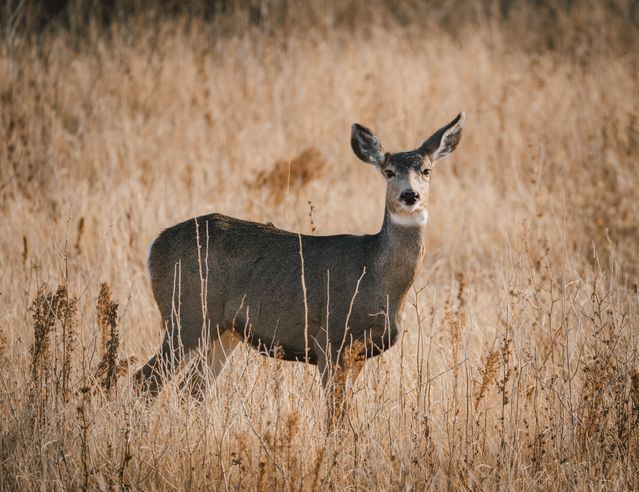
Mule Deer and Denver’s Expanding Urban Boundary
Mule deer are the largest wildlife species that Denver residents regularly encounter in their neighborhoods, and their presence has increased dramatically as residential development continues to push into the foothill transition zones along the western edge of the metro area. Communities in Lakewood, Golden, Morrison, Evergreen, and western Arvada experience the heaviest mule deer activity, though deer routinely travel along creek corridors deep into central Denver neighborhoods as well.
Denver’s mule deer conflicts are fundamentally different from the enclosed-space nuisance wildlife issues associated with raccoons, squirrels, and bats. Deer don’t invade homes — they invade landscapes. Browse damage to ornamental plantings, vegetable gardens, and young trees is the primary residential concern, followed closely by the serious public safety risk of deer-vehicle collisions on Denver’s suburban roadways.
Seasonal Deer Movement Patterns in Denver
Mule deer in the Denver metro area follow seasonal migration patterns driven by snow depth, food availability, and breeding activity. During summer, deer concentrate at higher elevations in the foothills and mountain parks west of Denver. As autumn arrives and the rut (breeding season) begins in November, deer activity and movement increase dramatically — this is when deer-vehicle collisions in the Denver area peak. Winter snowpack at higher elevations pushes deer downslope into residential areas, where ornamental landscapes provide accessible forage that natural winter range does not.
• Peak collision period: October through December (rut and early winter migration)
• Highest-risk time of day: 5:00 PM to 7:00 PM and 5:00 AM to 7:00 AM
• Highest-risk roadways: C-470, US-285, Highway 93, and Wadsworth Boulevard near foothill intersections
• If you see one deer crossing, expect more — mule deer travel in groups
• Do not swerve to avoid deer — brake firmly and stay in your lane
Protecting Your Denver Landscape From Deer Browse
Deer-resistant landscaping is the most sustainable approach to reducing browse damage in Denver’s deer-prone neighborhoods. While no plant is truly “deer-proof,” species with strong aromas, fuzzy or prickly textures, and bitter flavors are consistently avoided by mule deer. Proven deer-resistant choices for Denver landscapes include Russian sage, lavender, blue mist spirea, ornamental grasses, yucca, and most herb varieties. Colorado State University Extension maintains a regularly updated list of deer-resistant plants tested specifically in Front Range growing conditions.
For high-value plantings that cannot be replaced with deer-resistant alternatives, physical exclusion is the only reliable protection. Individual tree guards made from welded wire or plastic mesh protect young trees during their vulnerable first five years. Entire garden areas can be enclosed with 8-foot deer fencing — anything shorter is inadequate, as healthy mule deer can easily clear a 6-foot barrier from a standing start. Electric fence systems using polytape and low-impedance chargers offer a lower-cost alternative that is effective when properly maintained.
Deer Damage on Your Denver Property? Get Professional Advice
Contact a licensed Denver wildlife control professional for a free inspection today.
Mule deer are an iconic part of Colorado’s natural heritage and an irreplaceable component of the Front Range ecosystem. Denver communities that invest in deer-compatible landscaping, responsible driving habits, and habitat-corridor preservation can successfully coexist with these magnificent animals while minimizing the conflicts that inevitably arise where urban and wild spaces overlap — the same coexistence philosophy that guides humane approaches to coyotes, foxes, and all of Denver’s native wildlife.